
The Fourth Trimester: What No One Tells You About the First 40 Days After Birth
The pregnancy books end at birth. That is the problem.
Nine months of preparation, hundreds of pages of advice, dozens of appointments – and then the baby arrives and the guidance largely stops. The focus shifts entirely to the newborn, and the mother is left to navigate one of the most profound physiological and psychological transitions of her life with remarkably little structured support.
This is the fourth trimester: the 12-week period following birth during which both mother and newborn are continuing processes that began before birth. It is a concept that has existed in clinical literature for decades but has only recently entered wider cultural conversation. In Vietnam, traditional practice has always known it, even if the terminology is different. Ở cữ is, in many ways, the original fourth trimester protocol.
| DEFINING THE FOURTH TRIMESTER
The term “fourth trimester” was popularised by paediatrician Dr. Harvey Karp in the early 2000s to describe the developmental needs of newborns in their first three months. It has since been broadened by maternal health researchers to encompass the mother’s recovery as well. The World Health Organization’s 2022 postnatal care guidelines define the critical postnatal period as 6 weeks (42 days) and set out comprehensive recommendations for care during this window. Maternal health researchers increasingly advocate for recognising a broader recovery window of up to 12 weeks — the fourth trimester — noting that many physiological and psychological recovery processes extend well beyond the 6-week mark. |
What Is Actually Happening in Your Body
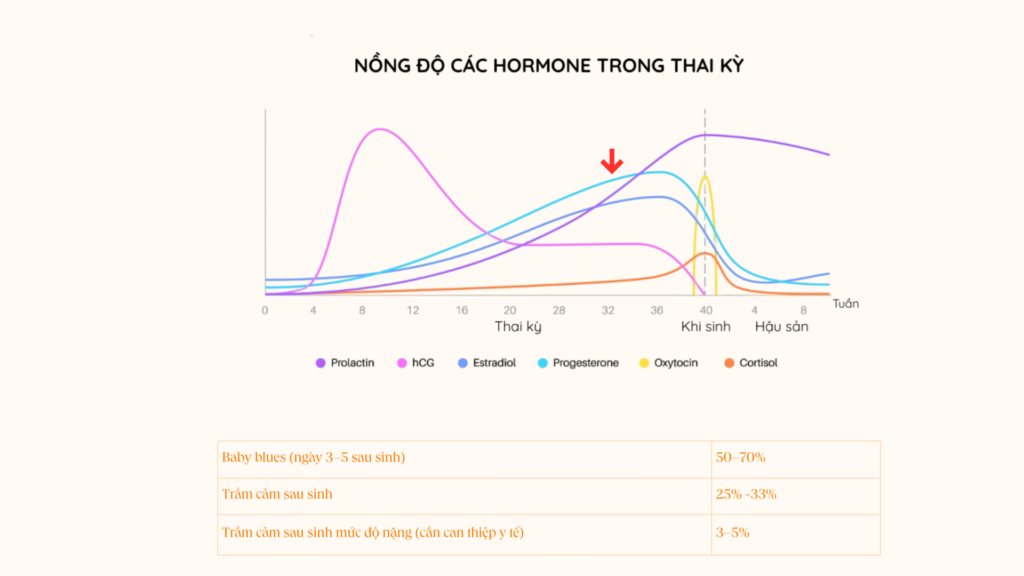 In the hours, days, and weeks following birth, the maternal body undergoes a cascade of physiological changes that are as dramatic as any that occur during pregnancy itself.
In the first 24 hours, oestrogen and progesterone levels – which peaked during pregnancy – drop precipitously. This hormonal withdrawal is what triggers the milk production process, but it also contributes significantly to mood fluctuations, including the “baby blues” that affect the majority of new mothers in the first week.
The uterus, which expanded to accommodate a full-term baby, begins the process of involution: contracting back toward its pre-pregnancy size over approximately six weeks. This process can be uncomfortable, particularly during breastfeeding, when oxytocin release triggers uterine contractions.
For mothers who experienced perineal tears or episiotomies, tissue healing is underway. For those who delivered by C-section, abdominal wound healing is occurring simultaneously with all the other postpartum processes – a significant physiological load.
Blood volume, which increased by approximately 50% during pregnancy, is readjusting. Iron stores, often depleted by blood loss during delivery, are being rebuilt. The immune system is recalibrating. The pelvic floor, stretched and sometimes torn, is beginning the long process of rehabilitation.
This is not “recovery.” This is transformation.
The Emotional Landscape of the Fourth Trimester

The hormonal changes of the postpartum period do not only affect the body. They shape the entire emotional experience of new motherhood.
The “baby blues” – characterised by weepiness, emotional sensitivity, and mood swings – are experienced by up to 80% of new mothers and typically resolve within the first two weeks as hormones stabilise. They are a normal physiological response to the most rapid hormonal shift the human body experiences outside of puberty.
Postpartum depression is different: more persistent, more severe, and requiring clinical attention. It affects approximately 10-15% of mothers globally, with some research suggesting rates in Vietnam may be higher due to the intersection of hormonal, social, and cultural pressures specific to the Vietnamese postpartum context.
Postpartum anxiety, which is distinct from depression and can occur independently, affects a similar proportion of mothers. It is characterised by persistent worry, intrusive thoughts, and hypervigilance around the baby’s safety – and is frequently unrecognised because new mothers expect some level of anxiety to be normal.
| THE JOYFUL NEST APPROACH TO EMOTIONAL WELLBEING
Our wellbeing coordinators are trained to distinguish between normal postpartum adjustment and the early signs of postpartum mood disorders. Every mother at The Joyful Nest receives structured emotional check-ins throughout her stay, with immediate referral pathways to qualified mental health professionals when needed. We treat emotional wellbeing as a clinical priority, not an afterthought. |
What Your Newborn Needs in the Fourth Trimester
 The fourth trimester concept originated with the newborn. Dr. Karp’s original observation was that human babies are, in an evolutionary sense, born “too early” – the constraints of bipedal walking mean that the human pelvis cannot accommodate a fully matured foetal brain. As a result, newborns spend their first three months continuing development that other mammals complete in the womb.
This has practical implications. In the first weeks of life, your newborn is neurologically and physiologically prepared for the womb environment: constant warmth, constant sound, constant movement, constant contact. The transition to the outside world is jarring. The practices that help ease this transition – skin-to-skin contact, responsive holding, gentle rhythmic movement, feeding on demand – are not indulgences. They are developmental necessities.
Breastfeeding, when possible and desired, serves multiple fourth-trimester functions simultaneously: nutrition, immune protection, temperature regulation, neurological development, and emotional regulation for both mother and baby.
Why 40 Days Is Not a Superstition
Across cultures and throughout history, postpartum recovery periods have clustered around the same approximate timeline: 30 to 40 days. This is not coincidence, and it is not superstition. It reflects what the human body actually requires.
By approximately 40 days postpartum:
- Uterine involution is largely complete
- Breastfeeding, if established, has typically found a more settled rhythm
- The most acute hormonal fluctuations have passed
- Initial wound healing (perineal or abdominal) is well underway
- Newborn feeding patterns have begun to consolidate
This does not mean recovery is complete at 40 days. Pelvic floor rehabilitation may take months. Full hormonal stabilisation takes longer. But the 40-day mark represents a meaningful physiological milestone – one that traditional cultures across the world identified through observation long before clinical research confirmed it.
The Fourth Trimester at The Joyful Nest
Our 14-day and 28-day programs are designed around the fourth trimester framework. Every element of our care model – clinical monitoring, nutritional support, newborn care, emotional wellbeing, lactation guidance – is calibrated to the specific physiological and psychological processes underway during this period.
We work in close partnership with FHI 360 and Alive & Thrive, whose evidence-based maternal and newborn health frameworks inform our clinical protocols. Our team includes specialists in every dimension of fourth trimester care: registered nurses, certified lactation consultants, newborn care specialists, nutritionists, and trained wellbeing coordinators.
For families who choose a longer stay, we also offer continuity of care planning: guidance on how to maintain fourth trimester principles at home after your time at The Joyful Nest concludes.
What Premium Postpartum Care Actually Means
 There is a significant difference between a luxury postpartum stay and a clinically led one. The former offers beautiful environments and attentive hospitality. The latter offers all of that, plus the clinical expertise to identify and respond to the complex processes underway in both mother and newborn during the fourth trimester.
The world’s leading postpartum centres – Ahma & Co in California, Homb in Melbourne, and The Joyful Nest in Ho Chi Minh City – share a common commitment to this clinical dimension. Beautiful environments support recovery. Expert clinical care drives it.
Frequently Asked Questions
Q: How long is the fourth trimester?
A: The fourth trimester is the 12 weeks (approximately 3 months) following birth. Within this period, the first 40 days are considered the most intensive phase of maternal physiological recovery and are the focus of traditional postpartum practices like ở cữ.
Q: What is the difference between baby blues and postpartum depression?
A: Baby blues affect up to 80% of mothers and typically resolve within 2 weeks as hormones stabilise. They are characterised by mood swings, weepiness, and emotional sensitivity. Postpartum depression is more severe, more persistent, and affects approximately 10-15% of mothers. It requires clinical attention. If symptoms persist beyond 2 weeks or significantly impair daily functioning, please seek professional support.
Q: Why does The Joyful Nest offer 14-day and 28-day programs rather than shorter stays?
A: Our program lengths reflect the actual timeline of postpartum recovery. Meaningful clinical support, breastfeeding establishment, newborn care guidance, and emotional stabilisation require sustained time. Short stays can provide respite, but our experience and the clinical evidence suggest that 14 to 28 days allows for the depth of support that genuinely transforms the postpartum experience.
Q: Can my partner stay with me at The Joyful Nest?
A: Yes. We actively encourage partner involvement in the fourth trimester experience. Partners who understand the physiological and emotional processes of this period are better equipped to provide meaningful support both during your stay and after you return home. We offer partner orientation sessions as part of our program
| Begin your fourth trimester with the support it deserves. Contact The Joyful Nest to discuss our 14-day and 28-day programs. www.thejoyfulnest.com |

You may also like...

A Gentle Spotlight: The Joyful Nest Featured in Marie Claire
There are moments in this journey that feel like quiet affirmations - gentle reminders that the work we do is seen and felt. We are truly honoured…

The Joyful Nest Named Best Small Business of 2026 by AusCham Vietnam
A milestone for postpartum care in Vietnam - and a sign that mothers here are finally being offered something different. A Recognition That Reflects…
Returning to Vietnam, where motherhood begins differently
A story shared by Anna, her journey back to Vietnam for childbirth and 28 days at The Joyful Nest Caught between staying in the UK or returning to…


