
Why Staff Ratios Are the Most Important Thing You’re Not Asking About When Choosing a Postpartum Center
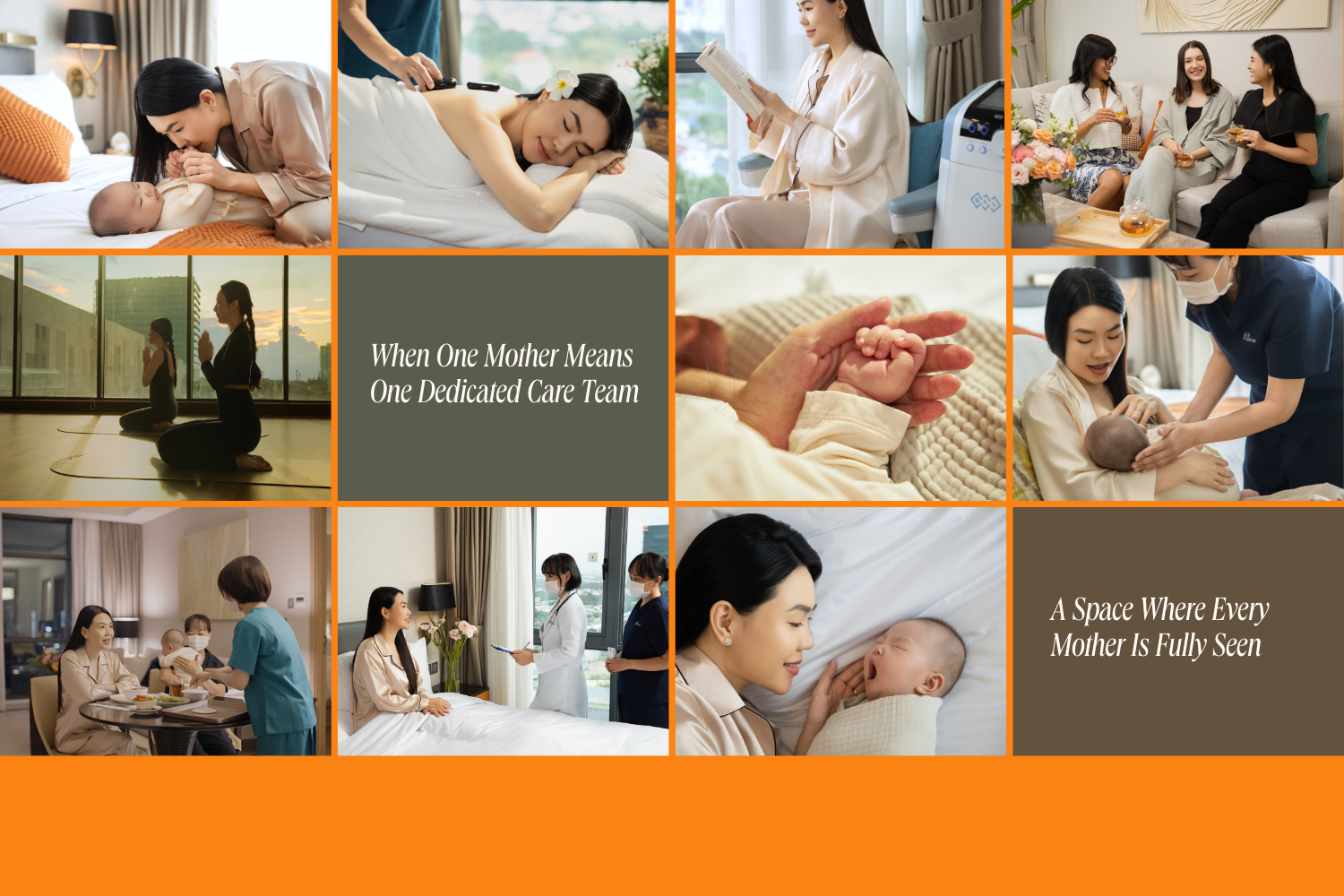
When families begin researching postpartum centers in Ho Chi Minh City, they typically ask the same questions. How large is the suite? Is there a private chef? What amenities are included? These are entirely reasonable things to consider. Comfort matters during recovery.
But there is one question that rarely gets asked – one that, more than any other, determines the quality and safety of your care. That question is: what is your staff-to-mother ratio?
At The Joyful Nest, we believe this is the single most important metric in postpartum care. Here is why – and what you should demand to know before choosing any center.
| CLINICAL INSIGHT
Leading maternal health researchers and clinical standards bodies – including AWHONN (Association of Women’s Health, Obstetric and Neonatal Nurses) – identify adequate caregiver ratios as a primary determinant of maternal recovery outcomes. In premium postpartum settings, a ratio of 1 clinical caregiver per mother represents the aspirational benchmark for genuinely individualised care. |
What Is a Staff Ratio, and Why Does It Define Your Recovery?
A staff ratio describes how many mothers are assigned to each caregiver at any given time. In a hospital maternity ward, this number is often 1 nurse to 6 or more patients. In a standard confinement facility, one carer may be responsible for 3 to 5 mothers simultaneously.
What does this mean in practice? It means response times are slower. It means care is reactive rather than proactive. It means the small, critical windows of newborn feeding support, wound monitoring, or emotional check-ins may be missed entirely.
The first 40 days after birth are a period of profound physiological change. A mother’s hormone levels are shifting dramatically. Her body is healing from one of the most significant physical events of her life. Her newborn is establishing feeding rhythms and sleep patterns that will shape the months ahead. This is not a period that benefits from divided attention.
The Industry Standard – and Why It Falls Short
Most postpartum facilities in Vietnam and across Southeast Asia operate at ratios of 1:3 to 1:5 – one caregiver to three to five mothers. Some facilities, particularly those offering lower price points, operate at even wider ratios.
These ratios are adequate for general monitoring. They are not adequate for genuinely bespoke, clinically attentive postpartum care.
Consider a typical evening in a mid-range postpartum center: one nurse is responsible for four mothers and their newborns. Two babies become unsettled simultaneously. A third mother needs assistance breastfeeding. A fourth is experiencing the intrusive thoughts that often accompany the postpartum hormonal crash. One person cannot meaningfully attend to all four situations at once.
Something – someone – waits.
The Joyful Nest Standard: What 1:1 Care Actually Looks Like
At The Joyful Nest, our clinical care model is built around an elevated staff-to-mother ratio that allows for genuinely individual attention. Our team includes certified lactation consultants, registered nurses with postpartum specialisation, newborn care specialists, and dedicated wellbeing coordinators.
This is not simply about having more staff on the floor. It is about the quality of presence each caregiver brings to your room.
- Feeding support is available within minutes, not hours. Breastfeeding establishment is one of the most time-sensitive challenges of early motherhood, and consistent, timely guidance makes a measurable difference to long-term outcomes.
- Clinical monitoring is proactive. Our nurses assess wound healing, blood pressure, hydration, and mood at structured intervals — not only when a call button is pressed.
- Newborn observation is continuous. Our newborn care specialists monitor feeding cues, sleep safety, weight gain, and developmental milestones throughout your stay.
- Emotional wellbeing is treated as clinical care. Our wellbeing coordinators are trained to identify early signs of postpartum anxiety and depression, and respond with structured support.
| THE JOYFUL NEST DIFFERENCE
Our partnership with FHI 360 and Alive & Thrive means our clinical protocols are benchmarked against international evidence-based standards. Our staff ratios, training requirements, and care procedures are reviewed against WHO guidelines and Ministry of Health recommendations for maternal and newborn health. |
Clinical Staff vs. Hospitality Staff: Understanding the Difference
One area of confusion when comparing postpartum centers is the distinction between clinical and hospitality staff. Some facilities advertise high total staff numbers — but when you look closely, the majority of that team is in housekeeping, food service, or concierge roles.
These are important functions. Excellent nutrition, clean environments, and attentive hospitality contribute meaningfully to recovery. But they are not the same as clinical care.
When you ask about staff ratios, clarify: what is the ratio of clinically trained staff — nurses, lactation consultants, newborn care specialists — to mothers? This is the number that governs your safety and recovery outcomes.
What Happens When Staff Ratios Are Too Low
The risks of inadequate ratios are well-documented in maternal and neonatal health research. They include:
- Delayed identification of postpartum haemorrhage, infection, or wound complications
- Insufficient breastfeeding support, leading to early cessation and associated health impacts for both mother and child
- Missed early indicators of postpartum mood disorders, including postpartum depression and postpartum anxiety
- Inconsistent newborn monitoring, with implications for feeding, weight gain, and jaundice detection
- Reduced maternal confidence, as mothers without consistent support are less likely to feel equipped in their new role
In a luxury setting, inadequate ratios are particularly insidious – because the beautiful environment creates a false sense of reassurance. The suite is immaculate. The meals are exquisite. But if the nurse is managing four other mothers when your baby cannot latch at 2 a.m., none of that matters.
Six Questions to Ask Any Postpartum Center Before You Book
Before committing to any postpartum facility – in Vietnam or anywhere in the world – we recommend asking the following directly:
- What is your nurse-to-mother ratio during daytime hours? What about overnight?
- How many of your staff are clinically certified, as distinct from hospitality or support staff?
- Do you have a dedicated lactation consultant on-site, or is this an on-call service?
- What is your protocol when two or more mothers need clinical attention simultaneously?
- Are your care standards aligned with any international or national clinical frameworks?
- What is your staff-to-newborn ratio in the nursery, if used?
A reputable postpartum center will answer these questions clearly, specifically, and with confidence. Vague answers, redirection to amenity descriptions, or reluctance to share ratios are meaningful signals.
Frequently Asked Questions
Q: What is the recommended staff-to-mother ratio at a premium postpartum center?
A: Leading postpartum care experts recommend a minimum of 1 clinically trained caregiver per 2 mothers for adequate care, with 1:1 ratios considered the gold standard for premium and medically attentive settings. Lower ratios are acceptable only for hospitality functions, not clinical support.
Q: Does The Joyful Nest have clinically trained staff available overnight?
A: Yes. Our clinical care model operates across all hours. We maintain clinical presence overnight so that feeding challenges, newborn concerns, and maternal health needs are supported at any time, not only during business hours.
Q: Is a high staff ratio the same as having a lot of staff?
A: Not necessarily. What matters is the ratio of clinically qualified staff to mothers in care. A facility can have many total employees while maintaining low clinical ratios if the majority of staff are in non-clinical roles. Always ask to distinguish the two categories.
Q: Why does the postpartum period require such attentive clinical care?
A: The 40 days following birth involve substantial hormonal shifts, physical recovery, and the establishment of critical newborn behaviours including feeding and sleep. This window is time-sensitive: early, consistent support produces measurably better outcomes for both mother and child. It cannot be fully replicated once the period has passed.
| Ready to experience clinically led postpartum care?
Contact The Joyful Nest to learn about our programs and availability. www.thejoyfulnest.com |

You may also like...

Fire Horse baby 2026: Warmth beneath the Energy
There is a moment - often quiet, sometimes overwhelming - when a mother senses that life is about to change forever.If you are welcoming a baby in…

Postpartum Food Delivery by The Joyful Nest
When Postpartum Nutrition Becomes a Source of Reassurance for Recovery Amid the profound changes at the beginning of motherhood, nutrition is not…

Holistic Home Care by The Joyful Nest
Where the Postpartum Recovery Journey Continues in the Comfort of Your Own Nest For many families, the postpartum period is not only about caring for…


